
Chicago’s business landscape is evolving fast as office habits, real estate markets, and neighborhood economies reconfigure around new expectations. Downtown Chicago remains a core asset — thanks to transit connectivity, world-class universities feeding talent, and a diverse corporate base — but the playbook for attracting employees and customers has changed. Here’s how leaders and property owners are adapting to keep the Loop and surrounding neighborhoods vibrant and competitive.
Worker experience over square footage
Employers are prioritizing purpose-driven office design. The office is increasingly positioned as a place for collaboration, mentorship, and culture building rather than a seat for every employee every day. That shift influences leasing decisions: teams want fewer desks but better amenities — flexible meeting space, high-quality food and beverage options, wellness rooms, and areas optimized for hybrid workflows.
Flexible lease structures are gaining traction, with tenants seeking shorter terms, scalable footprints, and coworking partnerships to handle project peaks. Landlords that offer plug-and-play suites, on-site management, and technology-forward building systems tend to attract businesses focused on agility.
Neighborhoods as extensions of the workplace
Companies are embracing a multi-hub approach that blends a central office with neighborhood outposts. This strategy reduces commute friction for suburban employees and supports local retail and hospitality by distributing foot traffic across the city. Neighborhood hubs in River North, West Loop, Fulton Market, and the North Branch corridor are popular because they combine food, culture, and transit.
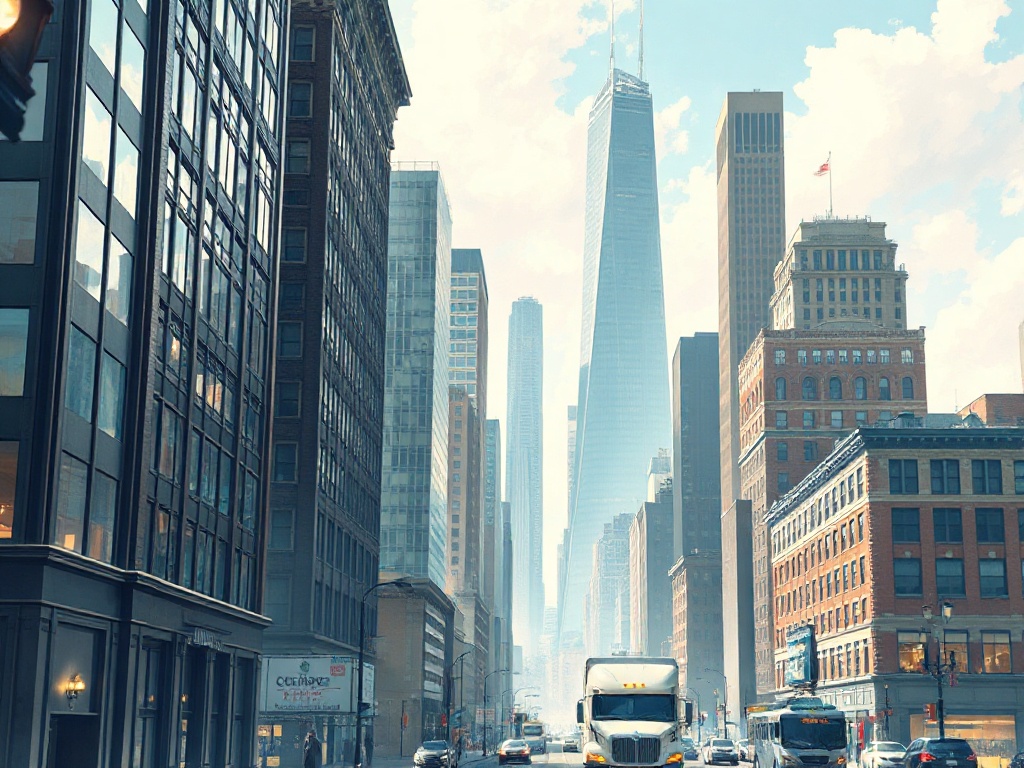
Adaptive reuse turns old buildings into modern workplaces and mixed-use assets.
Converting underutilized office towers into residential, life sciences, or creative space brings foot traffic back to streets and helps diversify building revenue streams.
Amenity ecosystems matter
Commercial success is increasingly tied to the surrounding amenity ecosystem. Restaurants, fitness studios, childcare, and public green spaces drive both leasing demand and consumer spending. Chicago’s riverwalk, park improvements, and investments in pedestrian infrastructure strengthen the downtown experience and make nearby offices more attractive.
Tech, life sciences, and advanced manufacturing
Chicago’s tech scene and life sciences cluster continue to expand, supported by research institutions and specialized incubators.
These sectors demand lab-ready spaces, reliable talent pipelines, and proximity to venture and corporate partners.
Industrial and advanced manufacturing are also benefitting from the city’s logistics advantages — robust intermodal connections and proximity to major highways make Chicago a distribution and innovation hub for regional supply chains.
Sustainability and resilience as differentiators
Energy efficiency, electrification, and climate resilience are top of mind for tenants and investors. Buildings that meet green certifications and offer transparent sustainability reporting tend to command premium interest. Flood mitigation and heat-resilient design are also important in building long-term resilience and reducing operating disruptions.
What business leaders and landlords can do now
– Reassess portfolio allocation: Balance downtown presence with neighborhood hubs and remote options to meet employee preferences.
– Invest in experience: Prioritize amenities that support hybrid collaboration, wellbeing, and convenience.
– Embrace mixed use and flexibility: Convert or retrofit space for residential, lab, or creative uses where demand is soft.
– Partner with civic stakeholders: Work with transit agencies and local business groups to improve last-mile connections and streetscape activation.
– Commit to sustainability: Make measurable improvements to energy and water efficiency to attract ESG-conscious tenants and investors.
Chicago’s commercial ecosystem is not shrinking — it’s recalibrating. Organizations that focus on workplace experience, neighborhood activation, and adaptive real estate strategies will be best positioned to attract talent, customers, and capital as the urban business environment continues to evolve.